Tuesday, October 6, 2015

SAG Website updates

The Society Of Australian Genealogists (SAG) has recently upgraded its website. They now have a new Event Registration system, which allows you view all upcoming events, search for an event, book for an event and pay online. The shop software has also been upgraded, providing secure payment system. This is one website worth a visit for their services, information and activities.

Labels: ,

Monday, November 3, 2014

Great Aunty Alice

When doing our family history, we all need help from a great aunt at some time. If yours have all passed on, you could try Great Aunty Alice, a new website, which is a directory of independent genealogical researchers based across the UK and around the world. No matter what stage you are at with your family tree, whether you need help with a small specific problem or would like someone to carry out extensive research, Great Aunty Alice has an array of researchers for you to choose from.
The site contains listings of genealogists, some are professionals while others are amateurs who are willing to help. All genealogy research questions are handled privately in email, not on the web site. Of course, professionals would need to be paid for their time and everyone should be reimbursed for any expenses they may incur, such as travel expenses, photocopying fees, postage, and more.
The web site's owner does not receive commissions for clients the researchers receive, and each listing is written by the individual researcher explaining their services. Great Aunty Alice simply serves as a directory to help put people in touch.

Labels: , ,

Monday, October 13, 2014

NSW BDM new online search

Have you tried to use the new online search facility at NSW Births, Death & Marriages? We have been spoiled in NSW with ease of searching historical registrations of births, deaths & marriages. The new search facility was to offer improvements, but they have been slow in coming and users have had to learn some new techniques to get the best use from the site.
The website address is still http:www.bdm.nsw.gov.au & from this main page go to the Family History Tab. There is no longer an annual release of registrations, but access is now available to births over 100 years old, marriages more than 50 years old and deaths more than 30 years old.
The wildcard function has been restored. You can use '?' or '*'
e.g. Anders?n to search for Anderson or Andersen (The ? replaces one character)
 or  Thom* will search for Thompson, Thomson, Thomas, Thomms etc. (The * replaces multiple characters)
A Soundex search facility is supposed to be coming.
You need to select your search i.e. Birth, death or Marriage. You are required to enter both a Surname and Given name, however if you use the wildcard *, it will help you get around this. e.g. Surname: Anderson & Given Name: * - so you get all the Andersons in the data base. Don't forget to enter a specific date or a date range. e.g. 21/4/1890 or 1/1/1890 to 31/6/1890. this will help narrow down your results.
There is a step-by-step guide to make better use of the website, but you won't get any helpful hints when using the search facility. The site is being continually improved, so users just need to be patient as better functionality is introduced.

Labels: , , , ,

Monday, August 25, 2014

Irish Genealogy website closes access to records

The Irish government closed part of its genealogy website last month, after the country's data protection commissioner warned that potentially sensitive personal details were available to all.
Irish Genealogy, a website created by the Department of Arts, Heritage and the Gaeltacht, offered people born or married in Ireland the ability to search for civil records such as birth certificates as part of their research into their heritage. But those records contain data such as dates of birth and mothers' maiden names, information which is frequently used as security questions for accounts such as online banking. That information is not legally defined as "sensitive" under Irish data protection law, but the commission stepped in to prevent the data anyway.
Billy Hawkes, the Irish data protection commissioner, said his office had been consulted on the site, but that it had not been made clear that the information available would be contemporary as well as historical.
The information contained on the website has always been publicly available, but before online access to civil records was turned on, it had required payment of a fee to get a copy of an individual record. But online, free searches offered the potential of malicious actors bulk downloading data in an effort to match up information with records from other sources.
The site, which only launched the search on Thursday 3 July, now notes that "Civil Records Search [is] temporarily unavailable … Further update will be provided."
In March 2013, when the Irish Genealogy site launched, it focused on historical records, offering users the ability to search the 1901 and 1911 censuses.

Labels: ,

Teapot Genealogy

Kaye Vernon & Billie Jacobsen, of Teapot Genealogy, have been indexing original New South Wales Archives records for over a decade, and have now created a searchable database covering all their work. You can now perform a name search across their entire database. Their resources include:
Individual indexes for each resource are available in CD format and are held at Manly Library. Kaye & Billie provide a range of research services, so it is worthwhile checking out their website http://www.teapotgenealogy.com/

Labels: , ,

Tuesday, April 29, 2014

Biographical Database of Australia

             The Biographical Database of Australia  (BDA) is a new genealogical resource which is now up and running with over 500,000 records on line already. This new research tool for historians and genealogists comprises transcripts and indexes of many original records and published biographies of deceased individuals who arrived in or were born in Australia, starting from the earliest times. This first release contains convict, muster, census, baptism, marriage and burial manuscript records for most of the New South Wales population 1788-1828, for Norfolk Island and Tasmania 1802-1811, and many immigrant and convict records from 1829-1837 along with full text of short biographies of 11,000+ residents of most colonies/states published 1881-1907. You can search the indexes for Free to see if this database is of use to you. This is a not-for-profit project, but there is a small annual subscription of $25 for access to the records. That is cheaper than one certificate from BDM.
Records of life events are linked to create a Biographical Report. From one report, subscribers can hyperlink to another biography to spouses, parents, children, witnesses, employers, employees and so on, through the entire database. (SAMPLE) . Future stages of BDA will add data from all states and territories, expanding from early records towards the present, including Aboriginal people, convicts and immigrants of all nations.

Labels: , , ,

Monday, April 28, 2014

Crowdsourcing Army for World War 1 archives

Operation War Diary is a cooperative effort by the British National Archives, the Imperial War Museum and crowdsourcing website Zooniverse aimed at making previously inaccessible data available to academics and amateur historians alike, creating a formidable “hive mind” concept to offer fresh perspectives on the First World War.
First World War unit diaries, digitised by the British National Archives, allow us to hear the voices of those that sacrificed their lives and are even more poignant now as there are no living veterans who can speak directly about the events of the war.
More than 10,000 people worldwide have volunteered to tag names, locations and other key details in the diaries since the site’s launch eight weeks ago and officials say their collective work — more than 260,000 named individuals and 332,000-plus locations — is equivalent to two years of archival work.
More than 200 diaries have already been verified using the data to digitally map and analyse patterns and trends in the four-year, unit-driven global conflict. Ranging from cover pages to maps to narrative reports, the diaries are catalogued by theatre of operations, unit and dates. Users can then select a diary “to work on” and provide missing pieces of the puzzle. Once completed, all of the data produced by Operation War Diary will be available for free. If you are interested in joining in, there is a ten minute tutorial to get started.
The story of the British Army on the Western Front during the First World War is waiting to be discovered in 1.5 million pages of unit war diaries. Operation War Diary needs your help to reveal the stories of those who fought in the global conflict that shaped the world we live in today.
Further information is available in an article by Joshua Rhett Miller  at  http://www.foxnews.com/us/2014/04/27/website-uses-collaboration-to-analyze-wwi-diaries-documents/

Labels: , , , , ,

Find-A-Record

Have you looked at Find-A-Record yet?
It’s a new website that allows you to search for genealogical records by a town, region, or geographic area, and it tells you what records exist in the place and time period that your ancestors lived. It looks at the records on FamilySearch, Ancestry, FindMyPast, WorldVitalRecords and other websites that have records that apply to that geographic area.
It has a simple homepage - look for the SEARCH button in the top left corner, this then takes you to another screen. Here you simply type in a place, narrow it down by year span, choose if you want to include only free records or paid record (or both), then tick which records you wish to look for (births, marriages, deaths, census, military, miscellaneous), and hit the SEARCH button.
Don’t expect to find everything, but you are more than likely to find some records for even small and remote towns or villages when looking for places in England, Ireland, Scotland, Australia, & New Zealand. There is also a video of how to make the most of the site. However it does not take you to the exact record, but rather the record set you should be looking in. It helps to narrow down your search by place, providing relevant records for your ancestors.

Labels:

Sunday, September 15, 2013

Who Do You Think You Are?

Ever wondered what research is needed to produce an episode of Who Do You Think You Are? It is certainly more involved than what you see on the telly. The research company for the U.S. version have created a website to give you a behind the scenes look at the popular show, providing more in-depth information about the research. The company is Progenealogists at http://www.progenealogists.com/whodoyou.htm

Labels: , ,

Monday, March 11, 2013

Founders and Survivors

Are you descended from a Tasmanian convict?
If so you will be interested in a new research project being undertaken by the University of Tasmania, which is looking into the lives of convicts transported to Tasmania.
Founders and Survivors: Australian Life Courses in Historical Context is a national collaboration between demographers, historians, epidemiologists and genealogists, who are examining birth, death and marriage records and other historical sources of Tasmanian convicts and their descents. The project is recording and studying the founding population of 73,000 men, women and children who were transported to Tasmania. The researchers are following mothers and daughters, fathers and sons, looking at life span, health, families, occupations and where they settled. They will then be connected with those that served in the AIF in World War 1 and compared with the service records of the male descendants of male convicts to investigate changes in height, childhood diet and health, and resilience under stress.
The project will produce the means of analysing the health and welfare of Australians over the past 200 years. This is a developing website, where increasing information is being released in searchable form. Even if you don’t have ancestors from this region, it is still a fascinating project to follow.

Labels: , , , ,

Monday, March 4, 2013

Grave Secrets


Grave Secrets is a website hosting a private collection of cemetery headstone photographs. It began in South Australia and is now expanding to cover other Australian States. It currently lists 289,500 headstone photos from 702 cemeteries accessible with a simple name search. Grave Secrets charge $2.50 for individual photographs. Australian Cemeteries provides a similar service free of charge, but Grave Secrets can provide access to some cemeteries not covered by Australian Cemeteries.
Grave Secrets has also introduced a new World War 1 Pictorial Honour Roll of Australians who served in the First World War with over 11,000 photographs with more being added weekly.
Many of the NSW cemeteries included are war cemeteries such as Cowra Japanese War Cemetery and the Cowra Australian War Cemetery, Rookwood War Cemetery, Bathurst, Coffs Harbour, Glen Innes, Hay, Narromine, Tamworth & Tenterfield War Cemeteries. Certainly worth a look with the centenary of the First World War in 2014.

Labels: , , ,

Wednesday, February 6, 2013

It appears there is a new website which will fill the gap left by the exit of 'Random Acts of  Genealogical Kindness'. It's Generous Genealogists, which is manned by a community of volunteers who agree to provide free genealogy research and assistance, as an act of kindness, to 'those in need'. They are also 'a vibrant, vital and growing community teaching and helping each other in the best methods and traditions of the genealogists of today, yesterday and hopefully tomorrow'.
Generous Genealogists volunteers agree to donate their time for free and recipients agree to reimburse volunteers for any costs or expenses incurred in fullfilling their request. (e.g. copies, printing fees, postage, parking fees, mileage etc.)
The assitacne, research and networking provided is made availabel freely and without respect or intent of financial gain. All any of hte volunteers will ever request of you is expense reimbursement and a 'Thank You'.
This is a website you should check out to see what it offers and what you can offer to the cause.

Labels: , ,

Sunday, September 9, 2012

Deceased Online

Deceased Online has announced the addition of more London Cemeteries from the Royal Borough of Greenwich in South East London to its database. Deceased Online is the UK's only website for statutory burial and cremation records.
Greenwich Cemetery, located just a few miles from central London, dates back to 1865 and is described by many as the cemetery with the best panoramic views in all London. It's position on the edge of Shooter's Hill gives the cemetery a wonderful location with views across all of central London and sweeping right around to Crystal Palace. Greenwich Cemetery features probably the best views of any cemetery in London across much of the capital. There are hundreds of war graves and a fascinating Norwegian section. Greenwich Cemetery has nearly 94,000 burials many historically interesting and include:
  • 556 WW1 burials scattered around the cemetery and an impressive Great War Heroes Memorial commemorates over 260 of these
  • Over 120 WW2 burials
  • An additional 30 WW2 Norwegian burials, part of a beautifully maintained Norwegian section
Eltham Cemetery (aka Falconwood) is a small cemetery, dating back to 1935, attached to Eltham Crematorium, but features some interesting memorials and burials including Richmal Crompton, author of the best selling 'Just William' novles and short stories. the cemetery comprises 15,00 burials and data for all of these are now available on Deceased Online together with 210,000 record for the Crematorium.
Most of the records for both these cemeteries comprise burial registers, grave details and cemetery maps with grave locations as well as some memorial photographs.
All burial records for the London Borough of Harrow in North West London have been included. Harrow Council manages seven cemeteries and all their burial records are inlcuded in the Deceased Online database. The records comprise:
  • Digital scans of burial registers
  • Details of graves including the names of all occupants
  • Maps of each of the cemeteries indicating the exact location of each grave.
The Deceased Online database for London now included 1.6 million records and this will top 2 million within the next few months as more cemeteries are added. among these are three more cemeteries for the Royal Borough of Greenwich.
You can search the central database for UK burials and cremations by Country, region, County, Burial Authority or Crematorium free of charge. or you can register as Deceased Online user and gain access to:
  • Computerised cremation and burial records
  • Digital scans of cremation and burial records
  • Digital scans of books of remembrance
  • Photographs of graves and memorials
  • Cemetery maps showing grave locations
  • other occupants in the same grave
A charge will wb incurred for these


Labels: ,

Tuesday, June 26, 2012

Social Networking From Beyond The Grave

Death may no longer be the end of things, including posting to Facebook and Twitter! A new U.K. site will put your social networking accounts to good use even after you’re passed into the world of your ancestors.
You can link your DeadSocial account to your Facebook, Twitter and Google+ accounts and write messages to loved ones and friends to be sent out at given times after your death — days, months, even years after you’ve passed. According to The Next Web, a “super administrator,” or a person you’ve chosen to access DeadSocial in the event of your death, can “untick” your account to indicate you’ve died and your pre-written messages can be sent out. You can learn more at http://vimeo.com/32396624
DeadSocial is a free platform that allows us to schedule secret messages. These are only distributed across our social networks when we die. The website was announced at South by South West (SXSW) as a finalist in The London Web Summit startup competition & a final four startup in The Next Web & Microsoft's Startup Rally 2012.

Labels: , ,

Monday, June 4, 2012

The Queen’s Jubilee Celebrations Online

In celebration of her Diamond Jubilee, and of Queen Victoria's birthday on 24 May, Queen Elizabeth II has made the journals of Queen Victoria available to the public.
The journals, running to over 43,000 pages, provide a picture of Queen Victoria's life from the first entry in 1832 at the age of 13 until 10 days before her death aged 81 in 1901.
Digital images of every page in Queen Victoria's diaries are available at Queen Victoria's Journals . Full transcriptions and keyword searching of the journal entries cover the period from Queen Victoria's first diary entry in July 1832 to her marriage to Prince Albert in February 1840. This is an ongoing project and journal entries will continue to be transcribed.
The 141 volumes were made public by the Royal Archives and Bodleian Libraries at Oxford University. It took four months to scan all the journals at Windsor Castle, where they were stored.
The journals, launched on the anniversary of Queen Victoria's birthday, provide an account of significant moments in her life throughout her 63-year reign, from her coronation and marriage to Prince Albert to the Diamond Jubilee of 1897. Important historical events such as the Crimean and Boer Wars are also traced in the diaries.
Victoria insisted that the diaries should be rewritten after her death by one of her children, omitting anything unsuitable. Thirteen of the original diaries are also online.

Royal Archives has also undertaken an online partnership project with website Find my Past to enable the public to trace ancestors who have worked for the royal household. There are 50,000 searchable records from 1526 to 1924 which give details such as name, occupation, age, length of service and salary. For more information go to http://www.findmypast.co.uk/content/news/royal-archives
And there’s more:
The British National Archives has also digitized a collection of 60 congratulatory addresses presented to Queen Victoria. This new online exhibition contains 60 of their favorite messages of congratulations and good wishes from around the world.
The beautiful, rarely-seen congratulatory addresses in the Privy Purse series (PP 1) were presented to Queen Victoria to celebrate her Golden Jubilee in 1887 and Diamond Jubilee in 1897.
The senders are many and varied, but comprise principally institutions of local government; schools and colleges; social, cultural, educational and religious societies; military and medical establishments; and those of trades associations and manufacturing companies.

Labels: , , ,

Monday, May 28, 2012

Olympic Records On-Line

Hundreds of historic documents and images relating to the Olympic and Paralympic Games have been made available online by the National Archives in the United Kingdom for the first time.
The new site the Olympic Record includes a timeline feature which enables visitors to track back through time and browse material from every summer olympics, from athens 1896 to beijing in 2008.
The files show the impact the Olympic movement has had in our hsitory in the 116 years since the modern Games were revived. From a brief dispatch in 1896 to the hugh presence today, the records reflect the growth of the Games throughout the 20th century as well as its remarkable survival through two world wars, political turmoil and boycotts.
Highlights from over 180 online records include: records from the London Olympic Games in 1908 and 1948, including arrangements for the first marathonat the now standard distance of 26.22 miles and accommodation and rations for athletes in the aftermath of the Second World War; Foreign Office discussions over Britain's participation in the controversial Nazi-run Berlin olympics in 1936; papers relating to the Greater London Council's plan to host the Olympics in London's docklands in 1984 and 1988 and Manchester's failed bid for the Games in 2000; archived web pages in the UK Government Web Archive from Athens 2004, Beijing 2008 and London 2012.
The site also provides a gateway to the hundreds of different sporting and cultural activities happening across the country this Olympic northern summer, from celebrations at natioanl and regional venues to local school and community projects.
The National Archives has taken the lead in working with central and local government as wll as sporting, cultural, media and heritage organisations to ensure records relating to London 2012 are preserved for future generations. This will be the prelude to The National Archives taking and making available vast collections of digital records in the future. The National Archives is also helping other organisations to rpeserve and make accessible their Olympic records as a permanent legacy of this extraordinary event.
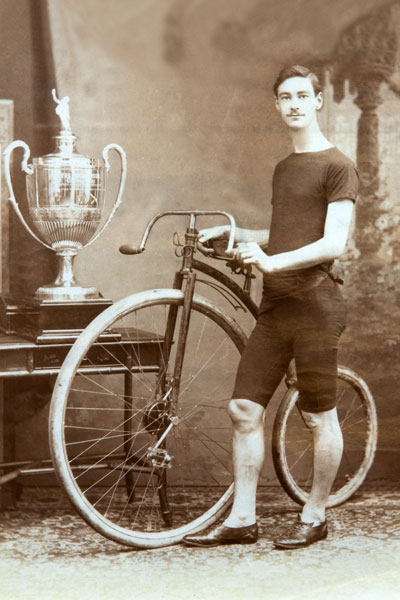
Photo: Frank Shortland, Cuca Cocoa cycling challenge cup champion.

Labels: ,

Sunday, May 13, 2012

Genealogy Cruises


Ever thought of going on a genealogy cruise?
Unlock the Past runs regular history and genealogy cruises, which combine the interests of genealogists, history buffs and cruise touring. The genealogy cruise offers added value to researchers who cruise, and a unique conference experience. Cruises include all accommodation, meals and entertainment on board as well as access to over 50 presentations and many other topics on offer in some form throughout the cruise. It will include the general cruise program with various port stops and additional cost shore tours. There are over 50 main presentations by a team of experts, plus more informal special interest groups, workshops and meal table themes on a variety of topics.  Check out the website for prices and further information http://www.unlockthepast.com.au/events/cruises

Labels: , ,

Sunday, May 6, 2012

Ancestry.com Launches new AncestryDNA Service

Ancestry.com has announced the launch the AncestryDNA™ service, a new affordable DNA test that enables purchasers of the DNA test and subscribers of Ancestry.com to combine new state-of-the-art DNA science with the world’s largest online family history resource and a broad global database of DNA samples.
The new DNA test analyzes a person’s genome at over 700,000 marker locations, cross referencing an extensive worldwide DNA database with the aim of providing exciting insights into their ethnic backgrounds and helping them find distant cousins who may hold the keys to exciting family history discoveries. By combining these genetic matches with Ancestry.com’s 34 million family trees and 9 billion records, AncestryDNA intends to provide a differentiated experience that helps find common ancestors dating back as far as the middle 18th Century.
AncestryDNA will initially be made available by invitation-only to Ancestry.com subscribers for $99, with the expectation that the service will be made available to the general public later this year. To learn more about AncestryDNA, or to sign up to be notified once it’s available, please visit www.ancestrydna.com

Labels: , ,

Monday, April 9, 2012

1940 U.S. Census

After much promotion, the 1940 U.S. Census schedules are now available for searching. There will not be an index immediately available to search by name, however several organizations have joined forces to take on this task and are asking for your help. The 1940 U.S. Census Community Project is a national volunteer service project that will likely make Internet history as the largest and most innovative use of 'crowd sourcing' ever seen. So you can help index the 1940 Census. They hope to have it totally indexed in six months. If you would like to help out go to -
https://the1940census.com/getting-started/
Ancestry.com is advertising the census availability as a means to attract people to ancestry.com. While it is available through Ancestry.com free for a limited time, it is also available through other sources without a fee and no membership requirements. The census can be checked out at:
http://1940census.archives.gov

During the live launch event of the 1940 Census, Census Director Robert Groves was set to search for a member of his family. But the image never loaded, according to a story in the Chicago Tribune. Upon launch the website 1940census.archives.gov was immediately overwhelmed. In the first three hours, the website had 22.5 million hits.
The site was designed to support 10 million hits a day, with 25,000 concurrent users. Access issues have now been addressed, but it adds weight to the claim that Genealogy is the biggest hobby in America.

Labels: ,

Sunday, April 1, 2012

Chronicling America: Newspapers online


The US is catching up to Australia in providing newspapers online. Chronicling America is a website maintained by the Library of Congress and provides free access to information about hsitoric American newspapers and select digitised newspaper pages from 1836 to 1922. It is produced by the Ntional Digital Newspaper Program (NDNP). NSNP, a partneship between the National Endowment for the Humanities (NEH) and the Library of Congress (LC), is a long term effort to develop an internet-based, searchable database of U.S. newspapers with descriptive information and select digitisation of hsitoric pages. Supported by the NEH, this rich digitial resource will be developed and permanently maintained at the Library of congress. an NEH award program will fund the contribution of content from, eventually , all U.S. states and territories.

With similarites to our National Library's trove website, you can spend hours finding all inds of data. Search terms are highlighted on the webpage, and type is easily manipulated for readability.

Certainly worth a look!

Labels: ,